[?]Subscribe To This Site


Crate Training A Dog
We give all the advice on crate training a dog and clicker training a dog. Crate training a puppy is important and we will show you why. So read all about dog crate training in this page.
| One of the important tools for your dog will be crate training. This will provide them with a space that can be used as a tool to help you housebreak and to ensure that they have a safe place when you are at or away from home.
What you need to understand is that when you are doing dog crate training, it will be important to never use it as a form of punishment. |
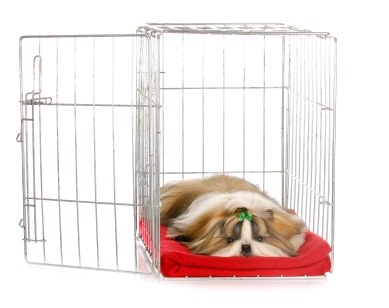
The crate should remain a safe place for your pet and to be a place they feel comfortable in.
| The concept for these crates is that the dog or puppy you have will look at this location as their home.
It can help with separation anxiety and destructive behavior. |
Dogs in general avoid the urge to soil an area where they will end up resting. This doesn't mean that accidents won't happen, but you will find that there is a significant reduction in this problem after crate training a dog.
When you begin this process, especially if you are crate training a puppy, the first thing you will want to do is ensure that your pet becomes comfortable with the idea of the crate.
A good idea is to set some treats in the crate and allow him to become comfortable in the space with the door open. This will let him know it is a safe place for him to be. Another good idea is to put some of their favorite toys in the crate, and their favorite bed or blanket.
It is important that when you are crate training a dog that you never force them inside of the crate.
This will install fear into your pet and it will be difficult to get them to go in willingly.
Some people will place the actual crate in the living room when dog crate training to help their pet become more comfortable with it.
This will install fear into your pet and it will be difficult to get them to go in willingly.
Some people will place the actual crate in the living room when dog crate training to help their pet become more comfortable with it.
Once you have built up the trust of the crate, you can then close the door. Start slow and close the door and leave your dog in there for a short period of time even if you are crate training a puppy.
Just remember when crate training a dog, that puppies under nine weeks of age should not be crated as they do not have any bladder control. Even puppies that are four months and younger should be crated at a minimum, because even at those ages they have little if any bladder or sphincter control.
You will want to leave the room and allow them time to become comfortable in the crate alone. It is important that you avoid responding to them whining during this time.
Only come back after they have settled down to open the crate. After the initial time spent in the crate, you will want to increase the time they are left in there by an additional hour each time.
This will help them get used to the process and to understand you will come back to them. Just make sure that you do check on them as often as possible when you are home, so they can be taken outside to relieve themselves.
You can then choose to leave them out or you can return them to the crate. Keep in mind that older dogs are going to need more reassurance when you are crate training them, as opposed to crate training a puppy.
This means you need to try to reduce the length of time that they spend alone and that you ensure leaving them alone isn't emotional and stressful for them.
A good idea for older dogs is to praise them and to show them that you missed them. The knowledge you are going to return and reward them will make the separation easier for them to handle.
Reminders When Crate Training Your Dog
|
Crate training a dog is a fairly easy task when you take a sensible approach to it. Remember, this a safe place for your pet that is never to be used as punishment. Make sure you use it responsibly and you should find that your pet responds to it in a very positive way.
Return To Training Your Dog To Stay From Crate Training A Dog
Return To Dog Jumping Fence
Return To Home